
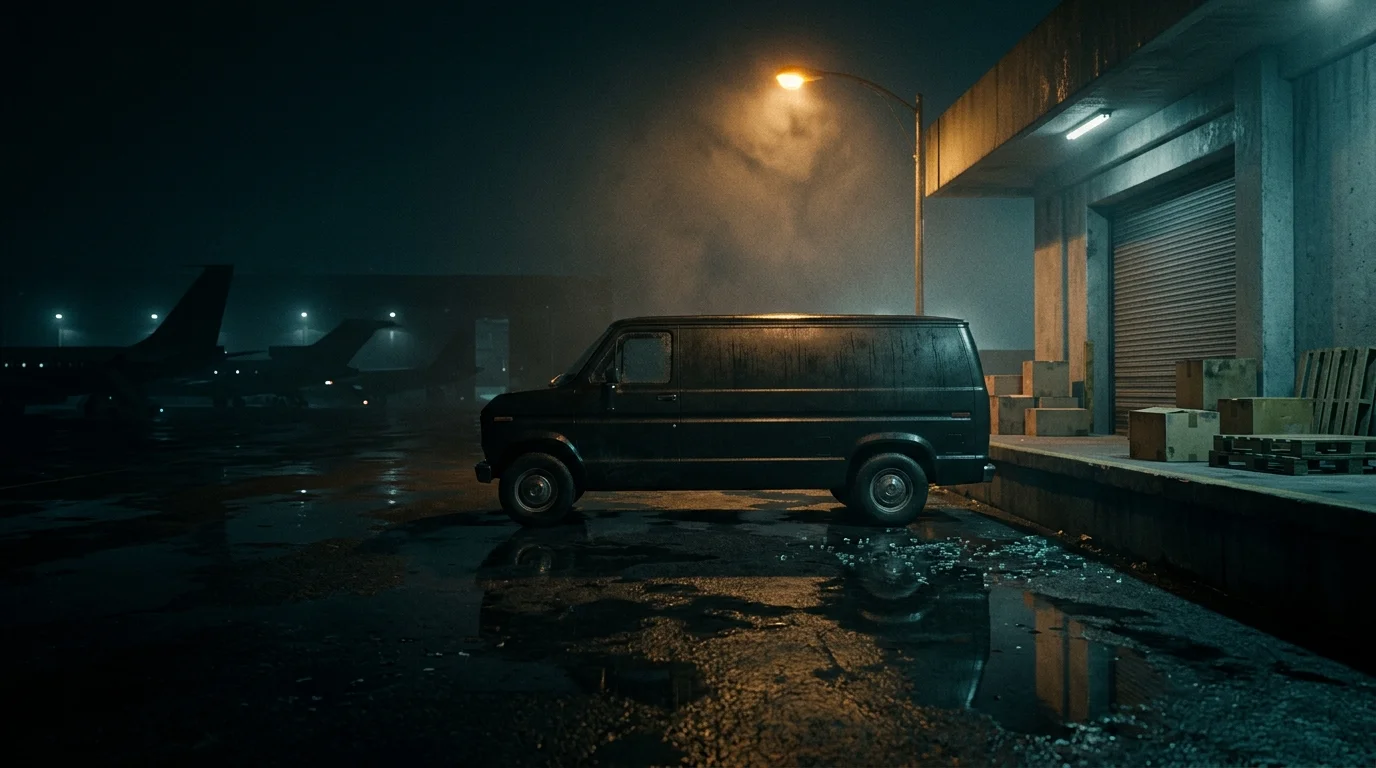
At three o’clock on a cold December morning in 1978, a black van rolled up to a cargo building at New York’s John F. Kennedy International Airport. About an hour later it drove away carrying $5 million in cash and $875,000 in jewelry.
It was the largest cash robbery in American history at the time. It was planned around a gambling debt, it inspired one of the most famous gangster movies ever made, and it set off a wave of murders as the man believed to be behind it made sure nobody would ever talk.
The money has never been found.
A tip from a man in debt
The story begins not with a gangster but with a cargo supervisor at Lufthansa named Louis Werner. Werner gambled, and he owed a bookmaker named Martin Krugman about $20,000.
Werner knew something valuable. The West German airline regularly flew large amounts of foreign currency into its cargo terminal at JFK, where it was stored in a vault before being picked up. He and a co-worker had already stolen $22,000 in foreign currency from Lufthansa two years earlier and got away with it.
Werner passed the information to Krugman. Krugman passed it to Henry Hill, a mob associate and drug dealer. And Hill took it to his mentor, James "Jimmy the Gent" Burke, an associate of New York’s Lucchese crime family whose crew specialized in hijacking trucks and robbing cargo from the airport.
Burke liked what he heard.
The plan
Burke put together a crew of six men to carry out the robbery, with others in support roles. His own son would drive one of the backup cars. Another associate, Parnell "Stacks" Edwards, had one simple job: get rid of the van afterwards so it could never be traced.
Each participant was promised a cut of between $10,000 and $50,000, depending on his role. Werner, the inside man, was promised 10% of the total.
Those numbers were based on an expected haul of about $2 million. Nobody realized how much money would actually be in the vault that night.
One hour at Building 261
In the early hours of Monday, December 11, 1978, a black Ford Econoline van carrying the six-man crew pulled up to Building 261, Lufthansa’s cargo terminal. They cut the padlock on the gate with bolt cutters and went inside wearing ski masks and gloves.
The night shift had no idea what was coming. One by one, the employees were taken by surprise:
- A senior cargo agent was the first to be captured. He was marched into the lunchroom, where five colleagues were on their meal break, and everyone was ordered to lie on the floor with their eyes closed.
- The night shift manager was lured upstairs and taken hostage too.
- A cargo agent driving past outside noticed two men sitting in a van at the loading ramp. When he walked over, he was grabbed, struck with a gun and dragged inside.
- Another employee heard a noise near the loading ramp, went to check and was captured as well.
The robbers knew exactly what they were doing. The manager later told investigators they understood the vault’s security system perfectly. It had two doors, and opening the second one while the first was still open would trigger an alarm at the airport police station. The crew made sure that never happened.
From the vault they carried out 72 cartons, each weighing about 15 pounds, filled with untraceable bills.
At 4:21 a.m., the van pulled up to the front of the building, the crew split between the van and a backup car, and they were gone. The employees had been told not to call the police until 4:30 a.m. The first emergency call came in at exactly that time.
The perfect crime, almost
The crew drove to an auto repair shop in Canarsie, Brooklyn, where Burke was waiting. The boxes of money were moved into the trunks of two cars and driven away.
All that was left was the van. Edwards was supposed to drive it to New Jersey, where it would be crushed at a junkyard and every trace of evidence destroyed.
He didn’t. Instead, he parked it outside his girlfriend’s apartment, in front of a fire hydrant, and went to bed.
Two days later, police found the illegally parked van. The license plates were stolen, so they towed it. Inside, investigators found Edwards’ fingerprints. And Edwards was well known to hang out with Jimmy Burke’s crew.
Within three days of the robbery, the FBI had a very good idea of who was behind it.
Listening in
The FBI threw everything at Burke’s crew. Agents followed them in helicopters and placed listening devices in their cars, in the phones at Robert’s Lounge, the bar in Queens where they gathered, and even in the nearest pay phones.
They picked up some tantalizing scraps. On one recording, a crew member talked about "a bag from Lufthansa." On another, he spoke to his girlfriend about digging a hole in the cellar.
But it was never quite enough. The recordings were full of background noise and vague references, and prosecutors could not get the search warrants they needed. Meanwhile, the crew was getting nervous, and so was Jimmy Burke.
The trail of bodies
According to Henry Hill, who later became a government witness, Burke grew paranoid after Edwards’ mistake drew so much attention. He decided that anyone who could connect him to the robbery had to go.
What followed was one of the darkest chapters in New York mob history. In the months after the heist, a series of people linked to it were murdered or simply vanished:
- Parnell Edwards, the man who failed to destroy the van, was killed just one week after the robbery.
- Martin Krugman, the bookmaker who had passed on the original tip, disappeared in January 1979 after repeatedly demanding his $500,000 share. His body was never found.
- Louis Cafora, who had been laundering money for Burke, bought his wife a custom pink Cadillac with his share, against Burke’s orders, and drove it to a meeting near the airport while the FBI was still investigating. He and his wife disappeared in 1979.
- Two airport supervisors believed to have helped plan the job were found dead together in a parked car five months after the heist. Both had reportedly been offered the chance to become witnesses and had refused.
Several others connected to the crew were also killed in the years that followed, some for unrelated reasons. With so many potential witnesses gone, there was almost nobody left who could testify.
Only one man convicted
In the end, investigators were able to build a case against just one person: Louis Werner, the inside man whose gambling debt had started it all. His girlfriend and a co-worker testified against him. In 1979 he was convicted and sentenced to 15 years in prison.
Jimmy Burke was never charged with the Lufthansa heist. He was later convicted of an unrelated murder and died in prison in 1996.
Henry Hill was arrested on drug charges in 1980. Convinced that his former friends were planning to kill him, he became an FBI informant and entered the Witness Protection Program. His testimony helped convict Burke and others of other crimes, but not of the Lufthansa robbery.
The case had one final twist decades later. In 2014, federal prosecutors charged a reputed Bonanno crime family captain in connection with the heist, more than 35 years after the robbery. In November 2015, a Brooklyn jury acquitted him of all charges.
Hollywood’s favorite heist
Hill’s story was told in Nicholas Pileggi’s 1986 book Wiseguy, which became Martin Scorsese’s 1990 film Goodfellas. In the movie, Robert De Niro plays Jimmy Conway, a character based on Jimmy Burke, and the Lufthansa robbery and its deadly aftermath are central to the plot.
The scene where the crew members who start spending their money too openly turn up dead one after another is based on what really happened.
Where is the money?
Nearly $6 million in cash and jewels, worth well over $25 million today, has never been recovered.
Some of it was almost certainly spent, laundered or lost as the people holding it were killed. Some may have been hidden by men who never lived long enough to dig it up. Over the years, there have been reports of searches and digs at properties linked to Burke’s crew, but no stash of Lufthansa money has ever been found.
It remains one of the great unanswered questions of American crime: how much of that money is still out there, buried in a basement or a backyard somewhere in New York?
Lessons from the heist
The Lufthansa robbery is a textbook case of the "insider threat," something security experts still study today. The crime only worked because someone on the inside knew where the money was, when it would be there and how the vault worked.
Businesses that handle cash or valuables now take a few lessons from cases like this one:
- Limit who knows. The fewer people who know where money is stored and when shipments arrive, the smaller the risk.
- Watch for financial pressure. Werner’s gambling debt made him vulnerable. Many companies now offer confidential support to employees in financial trouble, partly for this reason.
- Never rely on a single barrier. The vault’s alarm could be avoided by anyone who understood it. Modern security uses several independent layers, so that knowing one system is not enough.
Sources
- Wikipedia: Lufthansa heist
- Encyclopaedia Britannica: Lufthansa heist
- History.com: How the 1978 Lufthansa heist led to a trail of dead bodies
- Simple Flying: When the Lufthansa heist became the greatest cash robbery in the US
- Nicholas Pileggi, Wiseguy: Life in a Mafia Family (1986)
Leave a Reply